It’s time to renovate your bathroom when you see recurring mould, cracked grout, soft flooring near the shower or water pooling where it shouldn’t. These are signs of moisture damage, which gets more expensive the longer it’s left.
“It’s looking a bit tired” is usually the first thing people say, but by the time most homeowners actually call us, there’s more going on underneath than an outdated colour scheme. Here’s what genuinely signals it’s time, not just cosmetic wear.
Is it more than just old-fashioned?
Style dates, but that alone isn’t usually the deciding factor. The signs worth paying attention to are functional and structural: persistent mould that keeps returning no matter how often you clean it, grout that’s cracking or crumbling, water pooling anywhere it shouldn’t, a shower that never quite dries out, or soft or spongy flooring near the shower or bath. These point to moisture getting somewhere it shouldn’t, and that’s a “sooner rather than later” problem, not a cosmetic one.
Is your bathroom keeping up with your household?
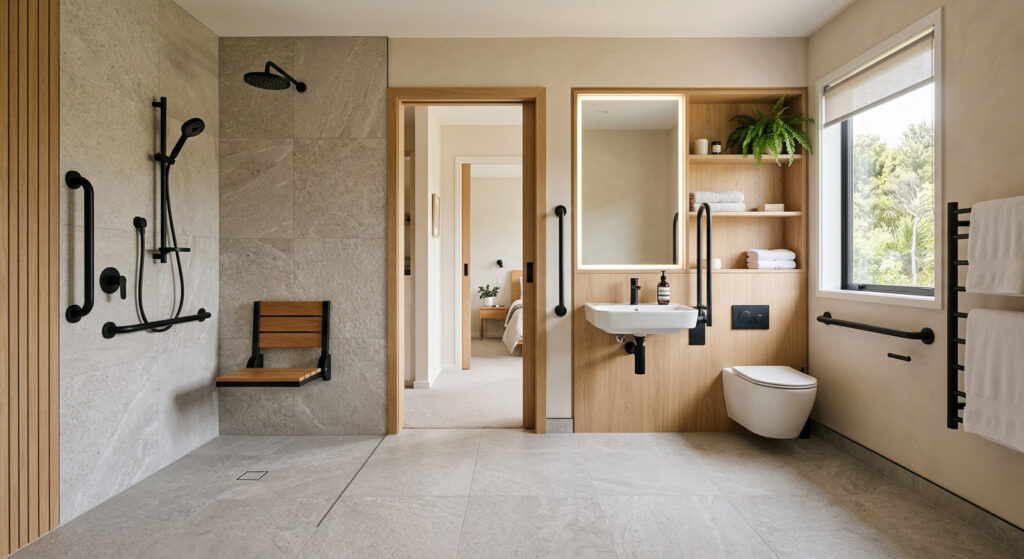
Sometimes the trigger isn’t wear at all, it’s your household outgrowing the room. A single bathroom serving a family that’s grown, a layout that no longer suits changing mobility needs, or simply losing the daily bathroom-queue battle are all valid reasons to renovate, even if the tiles technically still “work.”
What happens if you wait?
Cosmetic issues stay cosmetic for a while. Moisture issues don’t, left unchecked, they can affect framing and flooring, turning a bathroom renovation into a much bigger (and more expensive) repair job. If in doubt, it’s worth having someone take a proper look rather than guessing.
Not sure which camp you’re in?
If you’re weighing up whether your bathroom needs a full renovation or just a refresh, that’s exactly the kind of conversation worth having early. Talk to Justin first, he’ll give you a straight answer on what’s actually going on, and what your real options are, before you commit to anything.